

3DTutor™ Station
Advanced Vestibular Rehabilitation
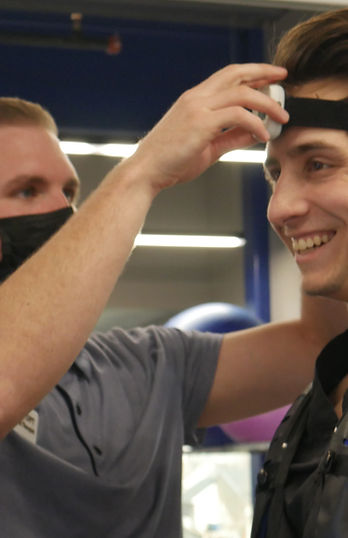
The 3DTutor™ Station by MediTouch is an advanced rehabilitation workstation designed for vestibular, oculomotor, visual, and cognitive therapy. Combining immersive software, customizable therapy modules, and an integrated clinical workstation, the system enables therapists to deliver highly personalized rehabilitation programs for neurological, vestibular, and geriatric populations.
At the core of the system is the Vestibular Module, which allows clinicians to create individualized therapy protocols that challenge eye–head coordination, balance integration, gaze stabilization, motion tolerance, and cognitive-motor performance in a controlled and measurable environment.

Designed for Modern Vestibular Rehabilitation
The 3DTutor™ Station is primarily developed for:
-
Vestibulo-Ocular Reflex (VOR) training
-
Gaze stabilization exercises
-
Saccadic eye movement training
-
Optokinetic stimulation
-
Eye–head coordination therapy
-
Motion sensitivity and vestibular rehabilitation
Using dynamic visual environments and therapist-controlled task progression, the system enables customized practice adapted to each patient’s functional level and rehabilitation goals.
Personalized Vestibular Training
The Vestibular Module allows therapists to:
-
Adjust task complexity and movement speed
-
Customize visual stimuli and head-motion demands
-
Combine vestibular exercises with cognitive tasks
-
Progress patients gradually based on performance
-
Simulate real-life balance and visual challenges
This flexibility makes the 3DTutor™ Station ideal for individualized neurorehabilitation programs and long-term therapy progression.

Integrated Cognitive Rehabilitation
Beyond vestibular and oculomotor therapy, the 3DTutor™ Station also functions as a powerful cognitive rehabilitation platform.
Visual–vestibular pathways activate key brain regions responsible for:
-
Attention
-
Working memory
-
Executive function
-
Processing speed
-
Visuospatial orientation
-
Sensory integration
-
Cognitive-motor coordination
By combining visual tracking, head movement, and dual-task activities, the system trains both sensory-motor and cognitive performance simultaneously.
Clinical Indications
-
Fine motor, sensory and cognitive impairments
-
Stroke
-
Multiple Sclerosis
-
Cerebral Palsy
-
Parkinson’s disease
-
Head injuries
-
Complex regional pain syndrome
-
Muscle weakness
-
Peripheral nerve injuries
-
Post orthopedic surgery e.g. tendon transfer
-
Fractures and soft tissue injuries
-
Upper/ lower extremity movement dysfunction
-
Strength and balance training

Unique Features
-
Evaluation and analysis including speed, passive and active range of motion and motion analysis
-
Documentation & Reports for
-
Controlled & Customized real-time accurate feedback on patient performance
-
Motivating & Challenging rehabilitation games
-
suitable for a wide variety of neurological and orthopedic injury and disease
-
Movement biofeedback prevents development of undesired and compensatory movements